Two Weeks of Staring at Nothing: What My Porch Taught Me About Boredom
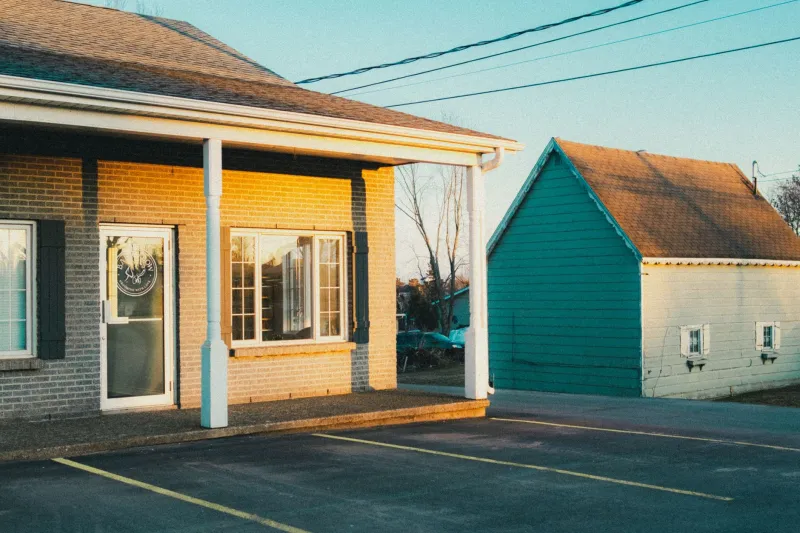
The rules were simple, which is exactly why they felt so strange. Every evening for two weeks, I would sit on my front porch for one hour. No phone. No book. No podcast, no crossword, no list of things to think about. Just me, a chair, and whatever happened to be happening on my street.
My wife thought I'd lost my mind. My brother-in-law asked if this was some kind of punishment. Honestly, I wasn't sure it wasn't.
The First Three Days Were Agony
Let me not oversell the romance of this. The first evening, I lasted maybe eleven minutes before I invented a reason to go inside — I needed to check the mail, I think, even though the mail had already come. The second evening I made it to twenty. By day three, something shifted, but not pleasantly. Without input, my brain started doing what unattended brains do: replaying awkward conversations from 2014, drafting imaginary arguments, cataloging every ache in my body.
Boredom, it turns out, has a withdrawal phase. Nobody warns you about that part.
We've Made Idleness Suspicious
Somewhere along the way, Americans decided that sitting still is a character flaw. We've industrialized the in-between moments. Every checkout line, every elevator ride, every commercial break is a slot machine in our pocket. Waiting isn't waiting anymore — it's an opportunity to consume.
There's even a guilt language around it now. "Productive rest." "Optimizing downtime." We can't just be bored; we have to be bored efficiently, with a side benefit we can report later. Doing nothing for no reason has become almost transgressive, like sunbathing in a business suit.
My porch hour was, in a sense, an act of quiet rebellion against my own habits. And it was harder than quitting caffeine.
Around Day Five, the Mind Ran Out of Garbage
Here's the part I didn't expect. Around the fifth evening, after the anxious replay-loop exhausted itself, my thoughts went... quiet. Not empty, exactly. More like a pond after the sediment settles. I started noticing things I'd been looking at for three years without seeing: the way my neighbor's maple drops its leaves in a specific order, the rhythm of the school bus, the guy three houses down who waters his lawn at 7 p.m. sharp every single day like he's clocking into a shift.
Then the ideas showed up. Not big ideas — small ones, the kind that need silence to survive. A solution to a work problem I'd been chewing on for weeks. A memory of my grandfather's garage that I hadn't visited in a decade. Half a sentence for an essay that turned into this one.
Researchers have a name for this — the default mode network, the brain state that activates when you're not focused on a task. It's where the mind consolidates, connects, and daydreams. We've essentially engineered it out of our lives, and then we wonder why we feel creatively tapped out and vaguely anxious all the time.
What Came Back
By the end of the two weeks, a few things had quietly returned:
- Patience. Lines and delays stopped feeling like emergencies.
- Ideas. More than I'd had in months, arriving unbidden.
- Awareness of my street. I know my neighbors' dogs by name now. That sounds small. It isn't.
- An actual end to my day. The porch hour became a border between work-brain and evening, a border I didn't know I needed.
The hour never became exciting. That was never the point. It became spacious, which is a different thing entirely.
I'm Still Doing It (Mostly)
I'd love to tell you I've kept the streak alive with monastic discipline. I haven't. Life intervenes, rain intervenes, and honestly, some evenings the phone wins. But the porch hour is now a standing appointment most nights, and I guard it more jealously than almost anything on my calendar.
If you want to try it, the instructions are embarrassingly short: pick a spot, pick an hour, bring nothing. Expect the first few days to be unpleasant. Push through to the quiet on the other side.
The art of doing nothing isn't lost. It's just been parked in a drawer while we scroll. It's still there, waiting, right outside the front door.