Where Everybody Used to Know Your Name: Notes From My Parking Lot Experiment
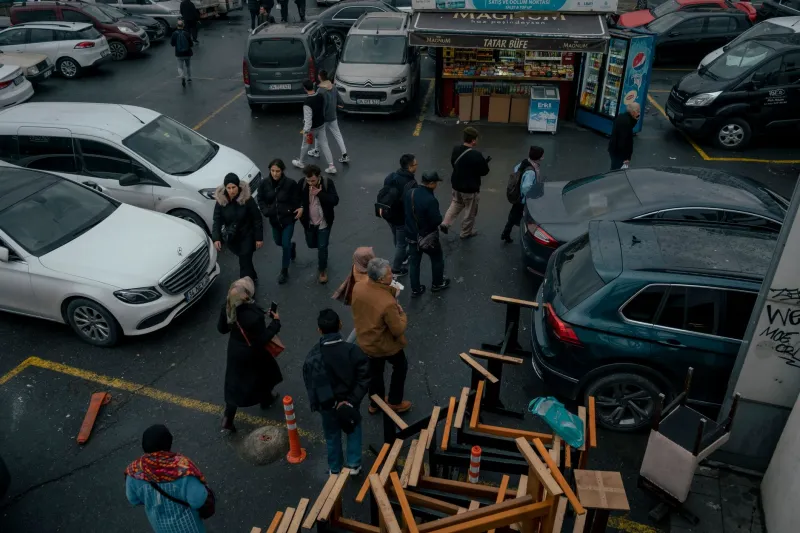
There's a folding chair in the back of the Kroger parking lot near my apartment that has, over the past four months, become one of the most important pieces of furniture in my life.
I should back up.
We Used to Belong Somewhere
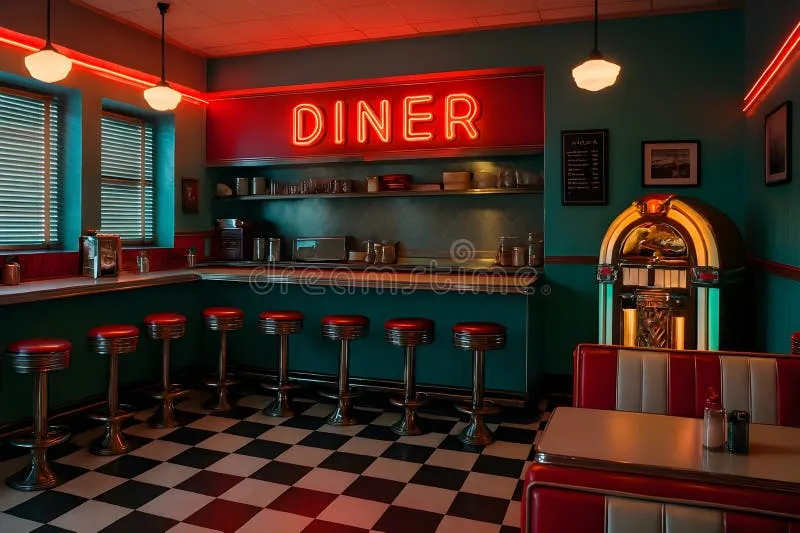
Ray Oldenburg, a sociologist most people have never heard of, coined the term "third place" back in 1989. The idea is simple: your first place is home, your second place is work, and your third place is everywhere else you go to just be — the bar where the bartender knows your order, the barbershop, the bowling league, the church basement, the diner counter. These places weren't about what you bought. They were about who you ran into.
And they're vanishing. The chain restaurants that replaced the local taverns all closed or went drive-thru. The bowling alley near where I grew up is now a self-storage facility, which feels like a metaphor so on-the-nose I almost resent it. Remote work dissolved the second place for millions of us, which means a lot of people now have exactly one place, and it has a laundry machine in it.
Delivery apps completed the siege. Why go anywhere when anywhere comes to your door in forty minutes, handed over by a person you'll never speak to?
The Thursday Night Experiment
I'm not a community organizer. I don't have a grant or a nonprofit or even a folding table. What I have is a suspicion that if you put a body in a public space on a regular schedule, other bodies eventually show up.
So in March, I started bringing a lawn chair and a thermos of gas-station coffee to the far end of the Kroger lot, near the cart corral, around 6 p.m. on Thursdays. I told maybe six people. I posted nothing online. The whole pitch, when I bothered to make one, was: "I'll be there. Bring a chair if you want."
The first three weeks, it was me and occasionally my friend Dave, who mostly looked at his phone. Week four, a woman named Yolanda who worked in the pharmacy asked what we were doing. "Loitering," I said. She laughed and came back the next week with her own chair.
By June, there were eight to twelve of us on any given Thursday. A retired mailman who brings his dog. A teenage kid who skates the lot's low walls and has strong opinions about everything. Two nurses on opposite schedules who sometimes overlap for twenty minutes. We have never once planned anything. We have never exchanged more than first names with half the group. It is, honestly, the least efficient social arrangement I've ever been part of, and it's the best part of my week.
Loitering Is Not a Crime (Mostly)
Here's the thing I didn't expect: how weird it feels. Just sitting somewhere, with no transaction happening, no purpose, no phone worth looking at. We've been trained to experience unstructured presence in public as suspicious — as vagrancy, or at minimum as something requiring an explanation to a passing security guard (one did approach, in week two; he now waves).
But that discomfort is the point. Oldenburg's whole argument was that third places run on "conversation, levity, and a leveling of status." The mailman and the teenager and the nurses have almost nothing in common except a parking lot and a willingness to show up. In my day-to-day life — algorithmically sorted, professionally networked, demographically targeted — I never would have met any of them.
A Modest Proposal
I'm not going to pretend a dozen people drinking coffee near a cart corral is a civic renaissance. But I've come to believe that loitering — deliberate, regular, low-stakes presence in shared space — is quietly one of the most radical things an American can do in 2025. It refuses the delivery app. It refuses the algorithm. It bets that some version of community still exists within walking distance of your car, waiting for someone to sit down first.
So here's my pitch: pick a spot. Anywhere public and semi-legal. Pick a time. Show up more than once, because the whole trick is the more than once — that's what turns a location into a place.
Bring a chair. The coffee is optional.
The Kroger lot is taken, but there's a hardware store near you with a very underused bench.