In Defense of the Novel in My Desk Drawer
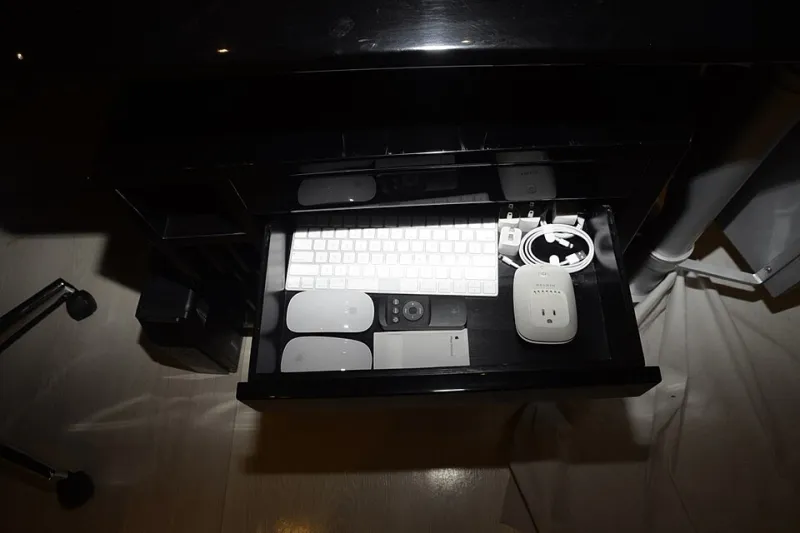
Photo: Federal Bureau of Investigation, Public domain, via Wikimedia Commons
Somewhere in my desk drawer, under a stack of charging cables and expired coupons, there's a Word document from 2019. It's a novel — or the first forty pages of one — about a guy who inherits a laundromat in rural Ohio and starts finding notes in the pockets of strangers' coats. It's not bad, actually. It's just not finished. It may never be finished.
For years, I treated that document like evidence. Proof of a pattern. The guitar in the closet that I learned three chords on before quitting. The sourdough starter I named Gerald, fed religiously for eleven days, then found bubbling sadly behind the oat milk in March. The watercolor set, the language app with its 340-day streak, frozen mid-sentence in Portuguese. A museum of things I started and abandoned.
I've changed my mind about all of it.
The Tyranny of Finishing
We live in a culture obsessed with completion. Finish the marathon. Ship the product. Publish or perish. There's a whole industrial complex of productivity gurus on YouTube who will tell you that the difference between successful people and everyone else is follow-through, and honestly, they're not entirely wrong. But they're selling a specific definition of success, one where every project is a contract you're obligated to fulfill.
Nobody ever asks what the projects get out of this arrangement.
Here's what I've come to believe: the unfinished project is not a broken promise. It's an open question. My laundromat novel taught me more about narrative structure than any book on writing ever did, precisely because I got deep enough into it to feel where it was straining. Gerald the sourdough starter taught me that I like the idea of baking bread more than the daily rhythm of it — which is genuinely useful self-knowledge, even if it came wrapped in failure-shaped packaging.
Curiosity Doesn't Need a Deliverable
Think about how a kid approaches the world. Nobody tells a seven-year-old they need to finish the dinosaur phase before moving on to outer space. Kids collect interests the way they collect rocks: freely, temporarily, with total commitment in the moment and no guilt at the pivot.
Somewhere along the way, we decided adults should be different. That hobbies need to become side hustles, that skills need to be monetized or mastered, that the only legitimate reason to learn guitar is to eventually play a full set at an open mic in Nashville or wherever.
But starting things and not finishing them is how a curious mind conducts research. Every abandoned project is data. I know now that I love the first act of a story but lose interest once the plot needs to go somewhere. I know that I'm drawn to the meditative part of baking — the measuring, the waiting — but not the precision. These aren't failures. These are findings.
The Projects That Keep Talking
Here's the part that surprised me. The unfinished stuff doesn't really go away. It just moves to a quieter room in your head.
My novel's protagonist still shows up sometimes, in the shower, on long drives. He's found another note. I've stopped feeling guilty about him. Occasionally I'll open the document, add a paragraph, and close it again — and that's fine. Some relationships are like that. Ongoing, low-maintenance, no pressure to get married.
I picked the guitar back up last winter during a snowstorm that shut down half the city. Three chords came back instantly, like the guitar had been waiting in the closet the whole time, which, technically, it had. I learned a fourth. That's where it stands. And I've made peace with the possibility that's where it will always stand.
A Different Kind of Resume
If I listed everything I've ever started and quit, the list would be embarrassing. If I listed everything those false starts taught me — about writing, about yeast, about my own attention span — the list would read like a strange, personal education.
Maybe that's what an unfinished project really is: tuition. You pay a little in time and effort, and you walk away knowing something real about yourself, even if you never walk away with the thing itself.
So no, I'm not going to finish the novel this year. I'm not going to revive Gerald. The watercolors stay in the hall closet, where they belong. But I've stopped keeping score. The drawer stays open. The conversation continues — slowly, privately, on no one's schedule but my own.
That's not a graveyard. That's a garden that grows at its own pace, in its own season, some years not at all.
I can live with that. In fact, I'm starting to suspect it's the whole point.