Nobody's Reading This, and That's the Whole Point
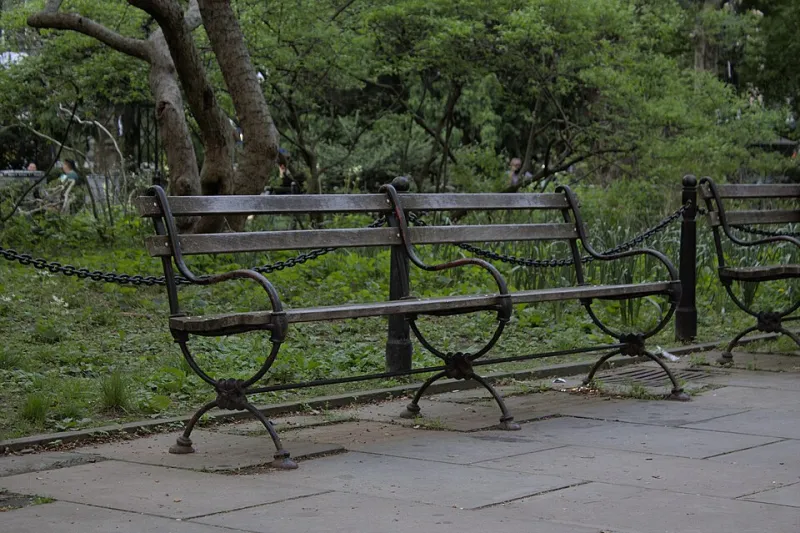
Photo: aismallard, CC BY-SA 3.0, via Wikimedia Commons
There's a spreadsheet somewhere in my life — I refuse to say whose — that tracks monthly visitors, bounce rates, and average time on page. It is a spreadsheet of disappointment. Not because the numbers are bad, but because the numbers exist at all.
Rishece doesn't have a spreadsheet. Rishece has, depending on the week, somewhere between eleven and forty readers, a few of whom are probably my mom on different devices. And I've come to believe this is not a failure state. It might be the last honest way to be online.
The Tyranny of the Audience
Somewhere in the last decade, having a corner of the internet stopped being a hobby and became a position you hold. You don't just write anymore — you build a personal brand. You pick a niche. You define your target reader. You study your analytics the way a farmer studies the sky, wondering whether this week's essay about your grandmother's kitchen will tank your engagement because the algorithm has decided people want listicles about productivity apps.
The platforms trained us well. Every post is a small performance review of ourselves. On Instagram you know within the hour whether a photo landed. On X, the ratio tells you everything. Even newsletters — supposedly the cozy alternative — come with open rates and subscriber counts that turn every send into a referendum on your worth.
A personal website with no audience escapes all of it. Nobody reads it, so nobody's opinion arrives. You can find out what you actually think.
What Is Rishece, Anyway?
Fair question. I get it maybe twice a year, usually from a relative. The name means nothing, officially. It started as a sound I liked — a word that looked good in lowercase letters at the top of a blank page. Some people assume it's a surname. One person emailed asking if it was Sanskrit. It is not. It is a door with no label on it, and I've stopped apologizing for that.
There's a strange freedom in an ambiguous name. A site called "The Minimalist Foodie Travels" has made a promise, and every post either keeps or breaks that promise. Rishece promises nothing, so nothing is off the table. One week it's an essay about highway rest stops. The next, it's a short story I abandoned in 2019 and have decided to publish out of spite. Try doing that on a platform with a niche.
The Garden Analogy, Which I Will Now Extend Past Its Limit
The old web — the one of GeoCities pages and hand-coded blogs and guestbooks — was full of gardens. Nobody's garden was optimized. You planted what you liked. Some weeks you tended it; some months you forgot it existed and came back to find the marigolds had taken over.
Compare that to the modern content farm, where every square foot must yield. A garden you have to justify to a landlord stops being a garden and becomes a landscaping obligation. Most of what we post on social media is landscaping. It's for the neighbors.
A website nobody reads is a garden behind a fence with a broken gate — technically accessible, practically private. You write because thinking on paper (on screen, whatever) is how you find out what you believe. The reader, if one ever wanders in, is a bonus, like a hummingbird. Nice. Not required.
But Isn't That Self-Indulgent?
Sure! Enormously. That's the pitch.
We've been sold a story that anything unmeasured is unearned — that if you're not growing an audience, you're talking to yourself, and talking to yourself is embarrassing. But the diary was never embarrassing. The mixtape was never embarrassing. The sketchbook nobody sees has produced more honest art than most feeds. Privacy of intention is not the same as irrelevance.
There's also a practical argument, for those who need one: the personal homepage is the only place online where you can't be deplatformed, throttled, or redesigned by a product manager in Menlo Park. Your domain is yours. The essay about your father's 1987 Honda Civic will live there as long as you pay the eleven dollars a year. No algorithm will decide it's seen enough.
How to Have a Website Nobody Reads
If any of this appeals, the recipe is short:
- Buy a domain. Pick a name that means nothing. Resist the urge to explain it.
- Write when you have something to say, not on a content calendar.
- Do not check the analytics. Better: do not install them.
- Link to things you love with no strategy whatsoever.
- When someone asks what the site is for, say "nothing," and enjoy their face.
The internet got very good at turning people into broadcasters, and very bad at letting them just be residents. The homepage nobody reads is the last room in the house that's yours — no guests to impress, no furniture arranged for photos.
Rishece will keep humming along out here, unoptimized and unbothered. If you found this, welcome. If you didn't, well — it wasn't for you anyway. That was sort of the whole idea.