The Museum of Almost: A Week Spent Curating My Phone's Trash
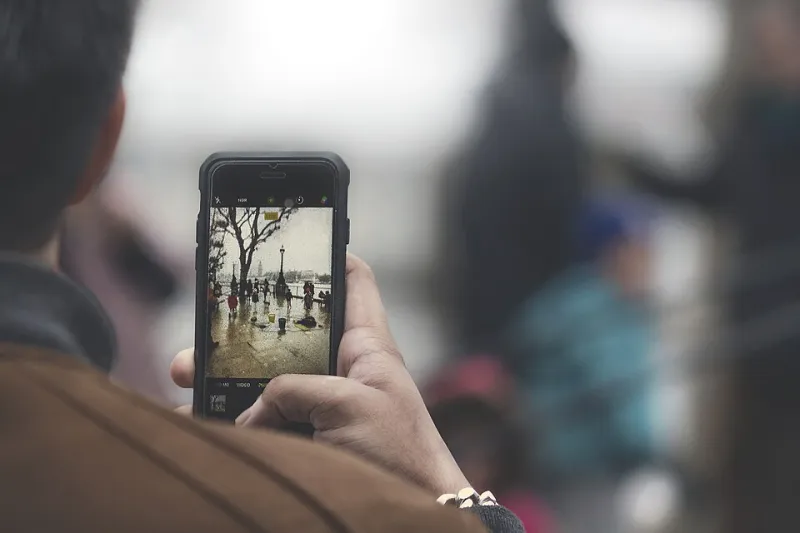
Photo: James Sutton jamessutton_photography, CC0, via Wikimedia Commons
The Recently Deleted folder on an iPhone is a strange place. It is not quite trash and not quite archive, more like a thirty-day layover where photos and screenshots sit with their bags packed, waiting to see if anyone files an appeal. On a Tuesday morning in November, I opened mine for the first time in months and found 1,847 items. That number felt less like a personal failing and more like a small municipal problem.
So I gave myself an assignment: spend one week restoring the deleted items, sort them into a mock museum, and see what the collection said. No re-deleting until Sunday. A velvet rope made of a charging cable. A docent played by me, in a cardigan, taking the whole thing far too seriously.
The Rules of the Exhibit
The rules were simple and slightly arbitrary, which is how most of my best ideas start. Every restored item had to be assigned to a wing. Every wing needed a placard. The placard could not be sarcastic for more than two sentences, because even a joke museum needs a little dignity.
The folder itself is a curious piece of design. Apple gives you thirty days to change your mind, which is either generous or an accusation. Either way, it turns deletion into a two-step process: first the tap, then the slow fade. You are never really done with anything. You are just in a holding pattern with your own indecision.
By the end of day one, I had restored 214 items. By day three, I had stopped counting and started arranging.
Wing One: The Gift Shelf
The first collection was screenshots. Dozens of them. A lamp I meant to buy for my sister in August. A book recommended by a stranger in a hardware store. Three separate screenshots of the same couch, taken weeks apart, as if repetition might make the price go down.
These were not memories. They were intentions that had curdled into clutter. Each one was a small promise I made to a future version of myself who had more time, more money, or better follow-through. The Gift Shelf was the most crowded wing in the museum and the least visited.
I kept one screenshot: a photo of a ceramic mug shaped like a very tired frog. It had been sitting in the folder since spring. I do not need the mug. I will probably never buy the mug. But it made me laugh in April, and that felt worth the storage.
Wing Two: The Evidence Room
Next came the photographs that existed only to prove something. A parking sign in a garage I would never find again. The back of a router, photographed at an angle that made the password illegible. A receipt for a return that had already been completed. A photo of a license plate, which I cannot explain and will not attempt to.
This wing was the most honest and the least interesting. It was pure administrative anxiety, preserved in high resolution. Every image was a tiny insurance policy against a future problem that had mostly already been solved. I deleted most of the Evidence Room on the spot, then felt guilty, then got over it.
Wing Three: The Unfinished Wing
Then there were the notes. Half-written paragraphs. A grocery list that included "ask about the thing." A list of names for a dog I do not own. A three-sentence beginning of an essay about my grandmother's porch that I had abandoned in June and apparently could not bear to throw away.
The Unfinished Wing was the hardest to curate because it was the hardest to judge. A deleted photo is just a photo. A deleted sentence is a small admission that you stopped. I restored eleven notes, read them all twice, and kept exactly one: a single line that read, "The trick is to notice when you're happy, not after." I do not remember writing it. I am not sure it's good. But it survived the week, which is more than most of my actual writing can say.
Wing Four: The People We Kept
Finally, the duplicates. The blurry candids. The group photos where everyone looks fine except me. The screenshots of text messages I had saved for reasons that were no longer clear. This wing had no placard, because I could not think of a polite way to describe it. It was just a pile of affection and evidence, the kind of thing you keep because throwing it away feels like a small betrayal.
I kept three photos from this wing. One was a picture of my friend's kitchen at a party in 2023, taken by accident when I set my phone down. The counter is covered in plates and someone's jacket is on the floor. It is not a good photograph. It is, however, the only proof I have that the night happened exactly the way I remember it.
What the Museum Taught Me
By Sunday, the exhibit had 39 items and a docent who needed a nap. The rest went back to the folder, which is where the whole thing gets philosophically interesting. I had not actually decided anything. I had just moved the indecision somewhere tidier.
Digital hoarding gets framed as a storage issue, but it is really a decision issue. We keep things because deciding is expensive. The Recently Deleted folder is not a trash can; it is a waiting room for people who are not ready to choose. The thirty-day countdown is the only thing in the entire system with the courage to make the call for us.
The museum closed on a Sunday night. I kept the frog mug screenshot, the line about noticing, and the kitchen photo. Everything else went back to digital limbo, where it will sit for another thirty days, waiting to see if I file an appeal. I probably won't.
But I might. And that, I think, is the honest version of the whole arrangement: a folder full of almosts, kept just in case the person I am next month turns out to be someone who needs them.