The Bio Generator Made Me Sound Employable. That Was the Problem.
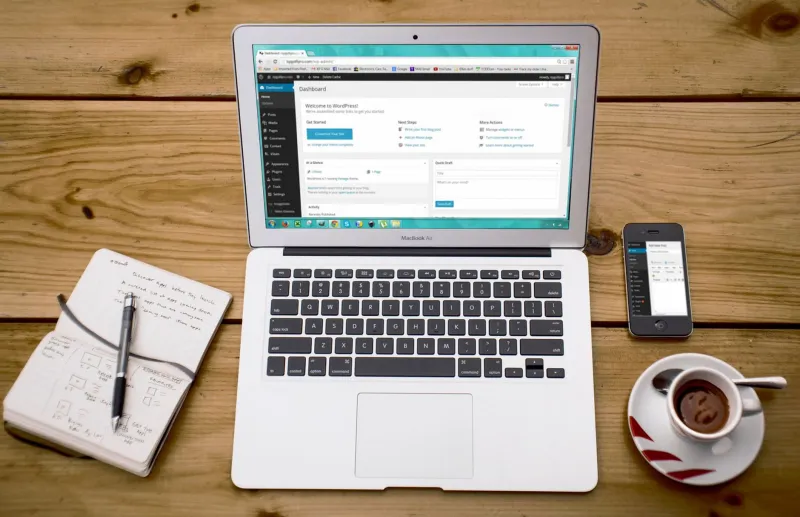
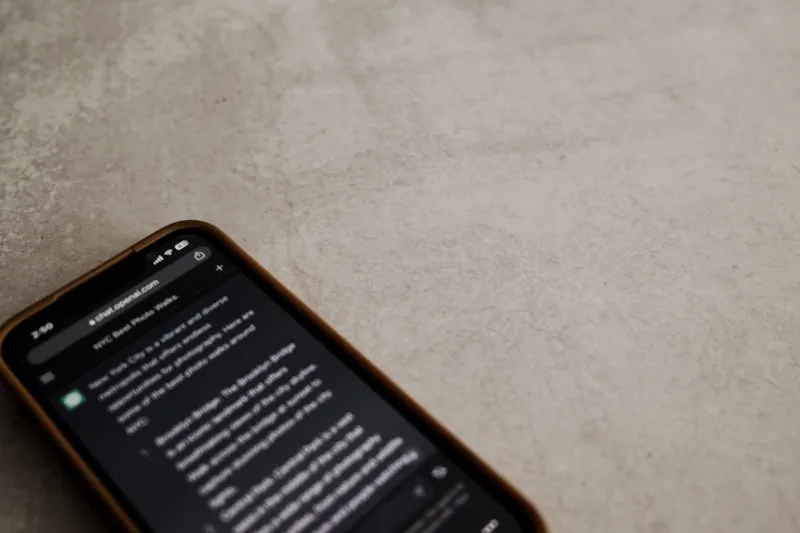
I have been avoiding my About page the way some people avoid the dentist. Not because it hurts, exactly, but because it requires me to explain myself in the third person, which feels like writing my own obituary with better lighting. So last month I did what any reasonable person with a website named Rishece would do: I outsourced the job to a chatbot.
The plan was simple. I exported years of essays—the ones about parking lots, garage sales, abandoned starter kits, diners with no address—and fed them into an AI bio generator with a prompt that basically said: make me sound like a person who writes things and occasionally leaves the house. The machine hummed. The cursor blinked. Then it produced a bio so clean I could have used it to apply for a credit card.
The First Draft Sounded Like a LinkedIn Profile With a Library Card
The AI bio read something like this: 'Rishece is a writer and curator of curiosity exploring the intersection of memory, place, and everyday life. Their work blends personal essay, cultural criticism, and quiet observation.'
It was accurate in the way a passport photo is accurate. It did not mention the two weeks I spent staring at a porch, or the month I logged every dollar I spent and learned nothing about money but a lot about my tolerance for spreadsheets. It did not mention the strange tangents. Those, as far as I can tell, are the point.
What it did mention was a subscription tier. After three revisions, the tool suggested I upgrade to 'unlock voice consistency' and 'advanced personality controls.' It was asking for a raise. Not in cash, exactly—$19 a month—but in the language of a performance review. 'You have used your free generations,' it said. 'Upgrade to keep your bio working for you.' I laughed, then felt a small chill. The bio was already working for me. That was the problem.
What the Machine Kept
It kept the nouns. Coffee, notebooks, parking lots, diners. It kept the mood: curious, wry, mildly nostalgic. It kept the structure—a list of themes followed by a sentence about 'the ordinary.' It even kept a phrase I liked, 'odds and ends from an unsettled mind,' because the site's tagline was floating somewhere in the archive. But it arranged everything into a shape that could be scanned in six seconds. That is what bios are for, I guess. But a personal brand is not a summary. It is a set of decisions about what to keep.
The bot also tried to spell Rishece three different ways and then suggested I 'simplify the brand.' I considered it. I have considered it for years. But the misspelling is part of the furniture now. You do not sand down the weird table leg just because a robot thinks it looks unstable.
What the Machine Sanded Off
The machine had no use for contradictions. It did not know that I love garage sales and hate owning things. It did not know that I started a parking lot experiment because I missed being recognized, then spent most of it hiding in my car. It did not know that the diner without an address is less about food than about the feeling of being a regular somewhere that could disappear. Those are not keywords. They are the weird little hinges that make an essay open.
It also did not know when I was joking. Some of my sentences are dead serious and dressed like jokes. Some are jokes that got serious halfway through. A model trained on the archive can imitate the rhythm, but it cannot tell you which sentence I would defend in a court of law. That is not a technical limitation. It is a human one.
The Raise, or the Upsell
I asked the chatbot to make the bio 'warmer.' It responded with a prompt to upgrade for tone controls. I asked it to make the bio 'less like a keynote speaker.' It offered me a template called 'Approachable Expert.' I asked it to mention the porch. It wrote: 'Rishece finds inspiration in liminal spaces.' I closed the tab and made a cup of coffee.
This is the part where I am supposed to announce that AI cannot replace human creativity, or that the machines are coming for our bylines. I do not think it is that dramatic. The machine wrote a perfectly usable bio. It was faster than me. It was tidier. It did not procrastinate. But it also did not care whether the bio was true in the way that matters—not factually true, but emotionally accountable. A human byline is not a guarantee of quality. It is a promise that someone was here, making choices, including the bad ones.
The Version I'd Actually Sign
I went back to the old About page. It was messy and a little embarrassing. It had a sentence about my favorite diner, a half-finished list of things I am bad at, and a note that I once tried to build a media empire on a single page. It was not optimized. It was mine.
I kept one line from the AI: 'odds and ends from an unsettled mind.' Then I wrote around it. The new bio is shorter, but it has a pulse. It says I write essays about the strange furniture of ordinary life—the porch, the parking lot, the lamp that cost five dollars. It says I am not sure what Rishece means, and that is fine. It says if you are looking for a tidy personal brand, this is not it.
Maybe that is the real negotiation. The machine can write a bio that gets clicks. It cannot stand behind the weird sentences. It cannot explain why the diner matters. It cannot ask for a raise and mean it as a joke. So I kept the byline. I paid the chatbot nothing. I did, however, give it a one-star review for trying to sell me personality controls. Then I went back to writing essays about nothing in particular, which is, for better or worse, the job.